What changed, and what is still to come, for restaurant, café and bar menus: one dated entry per country, each with the law’s name and a source you can open.
New price, new dessert, a dish sold out? Write it like a message. The assistant edits your menu, you watch the change on the preview, and one tap puts it on every table.
Menu assistantLu Kitchen
What shall I change?
Try one
Write a change…
Lu Kitchen
Preview
Mains
Drinks
Desserts
Mains
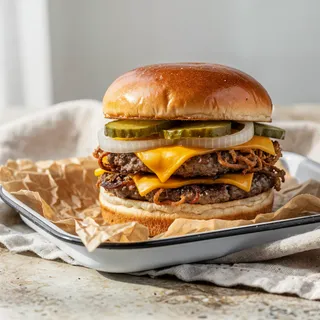
Smash burger
$14.00
Lobster roll
$24.00
Drinks
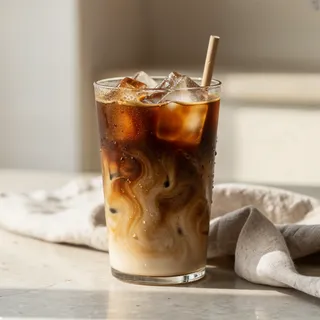
Iced coffee
$5.00
Lemonade
$4.00
Milkshake
$7.00
Desserts
Apple pie
$7.00
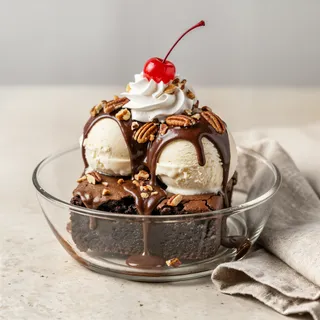
Brownie sundae
$9.00
Country by country
Every change, with its date and its source.
Tick: in force or due, and a menu can show it. Triangle: conditional, still ahead, or known only from a report. Cross: not allowed. The entries with the nearest dates ahead come first.
🇹🇷
Türkiye
The Guide to the Turkish Food Codex Regulation on Food Labelling and Consumer Information (revision 002, 10 March 2026) makes ingredients and energy value mandatory on menus, on a staggered calendar.
Ingredients and energy value per dish
Venues must tell guests the ingredients and the energy value of the food they serve (Guide art. 41.3). The ministry’s worked example gives one total kcal figure per portion, from average values in its TURKOMP database.
Allergens, alcohol and pork-derived ingredients
Given with the name of the dish, and emphasised so they stand apart from the rest of the ingredients (art. 41.2 and 41.5).
QR is allowed, with a written notice
Menus, boards, brochures, QR codes and digital screens all count. With a QR code, a written notice in easy view says the information is reached by QR and is given on request to guests without a device (art. 41.4).
Who, by when
National chains: 1 July 2026. Venues with three or more branches in one province: 31 December 2026. All others: ingredients by 31 December 2026, energy by 31 December 2027 (art. 47, confirmed by the ministry’s letter of 17 June 2026).
Dates that matter
10.03.2026 · Guide revision 002: articles 41.3 to 41.5 and 47
01.07.2026 · National chains: ingredients and energy
31.12.2026 · 3+ branches in one province: both. All others: ingredients
31.12.2027 · All others: energy value
Checks and fines
The Ministry of Agriculture and Forestry inspects; its letter went to all 81 provincial directorates. We did not verify a 2026 fine amount.
How GustoQR covers it
A kcal field and a free-text portion per item, the 14 allergens plus "contains alcohol" and "contains pork" notices, and the ingredients in the item description. The print studio prints the same menu for guests without a phone.
🇪🇺
European Union
Regulation (EU) 2025/40 on packaging and packaging waste applies from 12 August 2026. Two articles reach every venue that sells takeaway, and both come with a duty to tell guests on a sign.
By 12 February 2027: bring your own container
HORECA businesses that sell takeaway drinks or ready-prepared food provide a system for consumers to bring their own container to be filled, at no higher cost and under no less favourable conditions (Art. 32).
A sign at the point of sale
They inform consumers "through clearly visible and legible information boards or signs" that the product is available in a container the consumer brings (Art. 32(2)).
By 12 February 2028: a reusable option
Takeaway drinks and food are also offered in reusable packaging within a system for re-use, again announced on a sign and at no higher cost. Micro-enterprises are exempt from this article (Art. 33).
Dates that matter
12.08.2026 · Regulation (EU) 2025/40 applies
12.02.2027 · Art. 32: guests’ own containers
12.02.2028 · Art. 33: reusable packaging offer
Checks and fines
Penalties are set by each member state. For Germany’s amounts, see the next entry.
How GustoQR covers it
The sign is yours to print and hang. If guests also read your offer on the QR menu, repeat the sentence in the note under the menu, for example "Bring your own cup or box: same price." It is translated and printed with the menu.
🇩🇪
Germany
On 12 August 2026 the Verpackungsrecht-Durchführungsgesetz (VerpackDG) of 13 July 2026 replaced the Packaging Act. The duty to offer a reusable alternative for takeaway carried over as §§ 60 and 61.
A reusable alternative for takeaway
Venues that fill single-use plastic food packaging or single-use drink cups also offer the goods in reusable packaging, not at a higher price or on worse terms (§ 60(1) VerpackDG).
A sign in the venue, a line where you show the offer
Guests are told on clearly visible and legible information boards or signs. For delivery, the notice goes in the media used to present the offer (§ 60(2)).
Small venues: fill the guest’s container
With no more than five employees and no more than 80 m² of sales area, a venue may instead offer to fill reusable containers the guest brings. The sign is still required (§ 61).
Dates that matter
13.07.2026 · VerpackDG dated 13 July 2026 (BGBl. 2026 I Nr. 207)
12.08.2026 · VerpackDG in force; §§ 33 and 34 of the Packaging Act repealed
12.02.2027 · Fines for breaches of the EU regulation
Checks and fines
Up to €10,000 for not offering the alternative, pricing it higher or leaving out the notice (§ 66(1) nos. 26, 28, 29 and (3) VerpackDG, read on buzer.de). For the EU regulation: up to €200,000 for not providing the bring-your-own system and up to €10,000 for a missing sign (§ 66(2) nos. 29 and 31); § 66(2) applies only from 12 February 2027 (§ 68(17)).
How GustoQR covers it
Write the notice in the note under the menu, for example "Alle Speisen und Getränke zum Mitnehmen gibt es auch in Mehrweg, zum selben Preis." It shows under the QR menu, prints with it and is translated.
🇺🇸
United States
We found no new federal menu rule for 2026 or 2027. California and New York City moved: allergens per menu item at large chains, and warning icons for added sugars.
California SB 68: allergens per menu item
Commencing July 1, 2026, a food facility covered by the federal menu labeling law gives written notification of the major food allergens in each menu item: directly on the menu, or in a digital format such as a QR code that links to its digital menu (Health and Safety Code § 114093.5).
Digital needs a written alternative
A facility that goes digital also offers an alternative for customers who cannot use it: a separate allergen-specific menu, an allergen chart, grid or booklet, or other written materials.
Nine allergens, named or as pictograms
Milk, eggs, fish, crustacean shellfish, tree nuts, wheat, peanuts, soybeans and sesame (§ 113820.5), by their common names or standardized pictograms. Compact mobile food operations and nonpermanent food facilities are exempt.
New York City: added-sugar icon
Since October 4, 2025, chains with 15 or more locations nationwide post a warning icon next to prepackaged food and drinks with 50 g or more of added sugars, and next to unpackaged items sold as the same product, such as fountain sodas, with a warning about the health risks.
California SB 869, next
Approved on September 28, 2026 (Chapter 723): on or before January 1, 2029, chains of 20 or more display an added-sugar icon next to each standard menu beverage item with 100% or more of the FDA daily value for added sugar per serving, and a warning that explains the icon (Health and Safety Code § 114094.16). That value is 50 g, says Davis Wright Tremaine, which thinks a constitutional challenge is likely.
Dates that matter
04.10.2025 · NYC added-sugars warning rule in effect
13.10.2025 · California SB 68 approved (Chapter 741)
01.07.2026 · California SB 68 allergen notification starts
01.01.2029 · California SB 869 added-sugar icon due
Checks and fines
California: enforcement agencies may check allergen statements on printed menus, digital menus or the written alternative (§ 114093.5(c)). New York City: from January 2026, a summons subject to a $200 fine, according to NYC Health.
How GustoQR covers it
GustoQR’s 14 allergen fields include the nine US major allergens: wheat sits under gluten, crustacean shellfish under crustaceans, so write "wheat" in the description where you need the word. The print studio prints an allergen chart, one of the written alternatives the law lists. Warning icons are not a field: write the warning in the item description.
🇦🇺
Australia
Since 1 July 2026, hospitality businesses must show where their seafood comes from, before the guest orders, under the Country of Origin Information for Seafood for Immediate Consumption Information Standard 2025, an information standard of the Australian Consumer Law.
A, I or M on seafood dishes
Australian, imported or mixed origin (the AIM model), shown as abbreviations with a legend or as the words themselves.
Before the order, on paper or on screen
Labels must be visible in a physical or digital form before customers order, and be clear, prominent, legible and in English.
Who is covered
Businesses that serve seafood for immediate consumption: restaurants, takeaways, hotels, pubs, clubs and food trucks. WA Consumer Protection adds that canteens, schools, prisons and hospitals are outside the rules.
Keep proof of origin
WA Consumer Protection says a regulator can ask for proof, such as invoices, supplier emails or photos of packaging, and that records are kept for three months after the item was last offered.
Dates that matter
01.07.2026 · Seafood origin labelling starts, after a 12-month transition
Checks and fines
The standard sits within the Australian Consumer Law, enforced by Commonwealth, state and territory regulators. We did not verify penalty amounts.
How GustoQR covers it
There is no origin field. Write (A), (I) or (M) after the dish name or in its description, and put the legend "A Australian, I imported, M mixed origin" in the note under the menu: it shows on the QR menu and prints with it.
🇪🇸
Spain
Ley 1/2025 on the prevention of food loss and waste (BOE, 2 April 2025) gives guests the right to take home what they did not eat. Its general duties apply since 3 April 2026.
Leftovers go home, at no extra cost
Hospitality businesses let the consumer take away food not consumed, except in all-you-can-eat buffet formats (art. 8). The one cost allowed is a single-use plastic container, which waste law requires venues to charge for, the ministry explains.
Say so, preferably on the menu
The venue informs guests "de forma clara y visible en el propio establecimiento, preferentemente en la carta o el menú" (art. 8).
Prevention plan and donation: larger venues
From 3 April 2026. Micro-enterprises are excluded from article 6, and hospitality premises of up to 1,300 m² are excluded from the plan and the donation agreements (art. 6.4 and 6.6).
Dates that matter
02.04.2025 · Ley 1/2025 published
03.04.2026 · Article 6 duties apply
Checks and fines
The autonomous communities sanction. The law sets fines of up to €2,000 for minor infringements, €2,001 to €60,000 for serious ones and up to €500,000 for very serious ones (art. 21). The list of infringements in art. 20 does not name art. 8, but art. 20.1 keeps other sanction regimes, consumer law among them, applicable.
How GustoQR covers it
Write the sentence in the note under the menu, for example "¿Te ha sobrado comida? Pídenos un envase y llévatela, sin coste." It shows under the QR menu, prints with the menu and is translated with it.
🇧🇪
Belgium
The FPS Economy’s guidelines on price indication in horeca, in their version of 17 July 2026, state that a QR code alone does not meet the duty to show prices.
QR code only: not enough for prices
It is not sufficient to provide only a QR code that consumers scan with their own smartphone. A QR code is allowed in addition to a price list on another medium that guests can read directly.
Prices visible from outside, the full list inside
Prices in writing at a spot clearly visible from outside, and a complete price list of all meals, dishes and drinks inside (Royal Decree of 7 December 2016, arts. 1 and 3).
The price shown is the total price
VAT, taxes and compulsory services, table service included (Code of Economic Law, art. VI.4). Saying "VAT and service included" is not required.
Dates that matter
17.07.2026 · FPS Economy horeca price guidelines, current version
Checks and fines
The guidelines cite a criminal fine of up to €100,000, or 4% of annual turnover if higher, and up to €500,000 or 6% in case of bad faith. The Economic Inspection can also warn or propose a settlement.
How GustoQR covers it
Keep the QR code and print the list: the print studio prints the same menu with its prices, up to A2, for the entrance and the tables.
🇬🇧
United Kingdom
We found no new menu-labelling statute for 2026 or 2027. What moved is price presentation: the CMA’s guidance CMA209 of 18 November 2025, on the Digital Markets, Competition and Consumers Act 2024, names restaurant menus.
A menu is an "invitation to purchase"
The guidance lists "a menu (including a physical menu card or a digital menu that can be accessed through the scanning of a QR code) in a restaurant" among its examples.
Mandatory cover or service charges go in the price
Mandatory charges belong in the total price, and the guidance names "mandatory cover or service charges at a restaurant" among them. Presenting a charge separately or calling it an extra service does not make it optional, the guidance adds.
Dates that matter
18.11.2025 · CMA209 price transparency guidance published
Checks and fines
The CMA enforces the Act. We did not verify penalty figures for this page.
How GustoQR covers it
Enter prices with any compulsory charge already inside them. If a service charge is optional, say so in the note under the menu.
🇫🇷
France
Décret n° 2025-141 of 13 February 2025 extends the duty to show the origin of meat in restaurants from beef to pork, sheep and poultry. It took effect on 19 February 2025.
Origin of four meats
Beef, as since 2002, plus pork, sheep and poultry, for meat bought raw by the restaurant. Meat bought already prepared or cooked is not covered.
The wording
For pork, sheep and poultry, where birth, rearing and slaughter took place in different countries: "Elevé : (nom du ou des pays d’élevage) et abattu : (nom du pays d’abattage)".
Dates that matter
18.02.2025 · Décret 2025-141 published in the Journal officiel
19.02.2025 · In force
How GustoQR covers it
There is no origin field. Write the origin in the dish description, in the decree’s wording: it shows next to the dish, prints and translates with the menu.
🇨🇦
Canada (Québec)
Since 7 May 2025, tip suggestions in Québec are calculated on the bill before taxes, under the Loi protégeant les consommateurs contre les pratiques commerciales abusives, adopted in November 2024.
Tip suggestions before taxes
The government’s release: "Les suggestions de pourboire doivent être calculées sur le montant de la facture avant les taxes."
Neutral, uniform, with a free amount
Suggestions appear in a neutral and uniform way, and the option for the customer to set the amount must be offered and visible.
Dates that matter
07.05.2025 · Tip suggestions calculated before taxes
Checks and fines
The Office de la protection du consommateur informs merchants of their obligations. The release gives no penalty.
How GustoQR covers it
This is a rule for the payment terminal, so check yours. A line for guests, such as "Tip suggestions are calculated before taxes", can go in the note under the menu.
🇸🇦
Saudi Arabia
Three technical regulations of the Saudi Food and Drug Authority apply to restaurant and café menus since 1 July 2025. We did not read the regulations themselves: this entry rests on the announcement carried by the Saudi Press Agency on 27 February 2025 and on a Gulf News report.
A salt icon
On menu items with more than 5 g of salt (2,000 mg of sodium), on paper and electronic menus and on online ordering platforms, according to the Saudi Press Agency.
Caffeine content
For beverages, in milligrams per 100 ml or per cup, on paper and electronic menus, with a statement that the daily maximum for adults is 400 mg, according to the same announcement.
Activity time
Icons that show the physical activity, in minutes or hours, needed to burn the calories of a menu item, according to the same announcement.
Dates that matter
01.07.2025 · SFDA salt, caffeine and activity-time rules
Checks and fines
Gulf News says the SFDA urged venues to comply "to avoid penalties" and gives no amounts. The announcement names none.
How GustoQR covers it
A caffeine field (mg) and a kcal field per item. There is no salt icon or activity-time field: write both in the item description, where they show, print and translate with the menu. The 400 mg statement can go in the note under the menu.
🇷🇺
Russia
Two changes that are easy to get wrong: the Russian-language law of 1 March 2026 does not change menu rules, and the catering rules that were due to expire have reportedly been extended.
Russian on signs since 1 March 2026
Federal Law No. 168-FZ of 24 June 2025 added Article 10.1 to the Consumer Protection Law, on Russian in information meant for public display to consumers.
Menus: the new article does not apply
Rospotrebnadzor’s notice of 4 March 2026, as reported by Garant: Article 10.1 does not extend to information about catering services given through menus and price lists. That stays under Articles 8 to 10, which the 2025 law left unchanged.
Catering rules extended to 1 September 2027
Government Resolution No. 1474 of 9 November 2026 extends the Rules for Public Catering Services (Resolution No. 1515) from 1 January 2027 to 1 September 2027, according to the legal portal ppt.ru. The text on ConsultantPlus, a commercial legal database, replaces "1 January" with "1 September" in clause 2 of Resolution No. 1515 and is marked as not yet in force. We have not seen the official publication.
Dates that matter
01.03.2026 · Article 10.1 of the Consumer Protection Law in force
09.11.2026 · Resolution No. 1474 (reported)
01.09.2027 · Reported new expiry of Resolution No. 1515
How GustoQR covers it
Russian can be the main language of the menu, with other languages chosen by the guest. Portion, kcal, protein, fat and carbs are fields per item.
Next deadline: 31 December 2026, Türkiye.
By then every venue in Türkiye shows the ingredients of each dish, and venues with three or more branches in one province show the energy value too. Single venues have until 31 December 2027 for energy. After that, the next date on this page is 12 February 2027 across the EU.
All of this is on the free plan, which has unlimited customers. Pro is $49 a year and adds the menu assistant.
Calories and ingredients per item
A kcal field and a portion field per item; ingredients go in the description. The Pro menu assistant can fill many items from one message: treat its calories as estimates to check.
Allergens and a printed chart
Tick the 14 allergens per dish. The print studio prints an allergen chart from the same data, for guests who cannot use the QR code.
Origin letters and legends
Seafood origin (A, I, M) and meat origin have no field: write them in the description and put the legend in the note under the menu.
Notices for guests
Leftovers in Spain, your own container in the EU, reusable packaging in Germany: one sentence in the note under the menu, translated into 18+ languages and printed with the menu. Signs the law wants on the wall stay on the wall.
Paper next to the QR code
Belgium wants prices on a medium guests can read without their phone, California a written alternative to digital allergens. Print the menu and the chart from the same data.
Of the changes on this page, 31 December 2026 in Türkiye: every venue shows the ingredients of each dish, and venues with three or more branches in one province show the energy value too. Then 12 February 2027 in the EU, when takeaway venues must accept guests’ own containers and say so on a sign.
Does California’s allergen menu law apply to my restaurant?
SB 68 covers food facilities that fall under the federal menu labeling law, which means chains of 20 or more locations. Since July 1, 2026 they give written notice of the major food allergens in each menu item, on the menu or digitally. A digital format needs a written alternative such as an allergen chart.
Do EU restaurants have to accept customers’ own containers?
For takeaway, by 12 February 2027: Article 32 of Regulation (EU) 2025/40 asks HORECA businesses to provide a system for consumers to bring their own container, at no higher cost, and to announce it on a clearly visible sign. A reusable packaging offer follows by 12 February 2028, with an exemption for micro-enterprises.
Is a QR code menu still enough in 2026?
It depends on the rule. Türkiye allows QR for ingredients and energy with a written notice. California allows digital allergen information with a written alternative. Australia accepts physical or digital origin labels. Belgium’s economy ministry says a QR code alone does not meet the duty to show prices.
Do Spanish restaurants have to offer a doggy bag?
Yes, in substance: Ley 1/2025 obliges hospitality businesses to let guests take home food they did not eat, at no extra cost, and to say so clearly, preferably on the menu. All-you-can-eat buffets are the exception. A single-use plastic container may carry the charge that waste law requires.
Did Russia ban foreign words on menus in March 2026?
The law of 1 March 2026 is about information on public display, such as signs. According to Garant’s report of Rospotrebnadzor’s notice of 4 March 2026, the new article does not extend to information given through menus and price lists, which stays under the older articles of the Consumer Protection Law.
How was this page checked?
Every entry names the law, its date and a source we opened on 13 November 2026: the official text where we could read it, otherwise a regulator, a legal database, a law firm or a named news agency or outlet, and the entry says which. Laws change, so check the official text before you act on a date.